Can a portable power station run a gas furnace?
Updated Oct 18, 2026
We may earn a commission when you buy through links on this page. As an Amazon Associate I earn from qualifying purchases.
Yes, a mid-size or large power station can run most gas furnaces, and it’s one of the smartest uses for one in a winter outage. The gas does the heating; electricity only runs the blower, igniter and controls. That’s usually 300–800 W while the blower runs, far less than the 1,500 W an electric space heater needs to warm a single room.
The catch is the connection: most furnaces are hardwired, so you can’t just plug them in. More on that below.
How much power does a gas furnace use?
- Blower motor: the big one. Older single-speed (PSC) blowers draw about 400–800 W. Newer variable-speed (ECM) blowers often use 100–400 W.
- Start-up: a single-speed blower can pull two to three times its running watts for a moment as it starts, so surge rating matters.
- Igniter: a hot-surface igniter draws roughly 300–600 W for under a minute each heating cycle.
- Controls and inducer fan: another 50–150 W while running.
The blower doesn’t run nonstop. On a cold night it might run about half the time. Check the motor label or your furnace manual for exact figures, or measure the circuit with a clamp meter.
Runtime by power station
This table assumes a conservative older blower (500 W running, 1,500 W to start) running half the time. A furnace with a variable-speed blower will last noticeably longer.
| Power station | Capacity | Runtime |
|---|---|---|
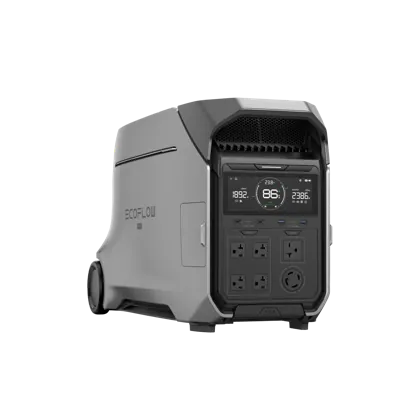 EcoFlow DELTA Pro 3 | 4,096 Wh | 13.9 h |
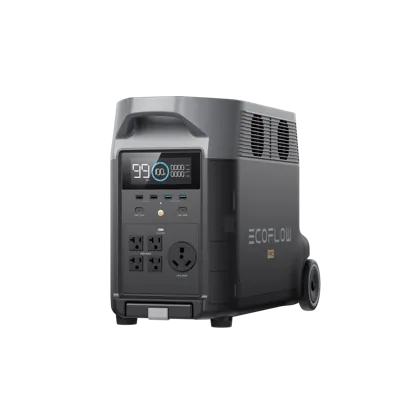 EcoFlow DELTA Pro | 3,600 Wh | 12.2 h |
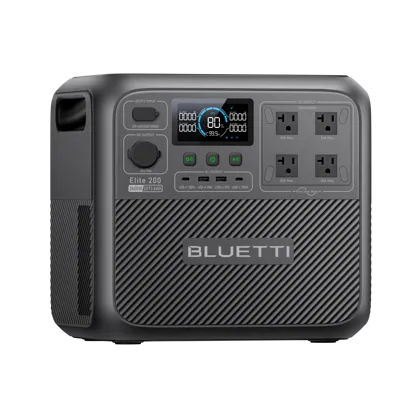 BLUETTI Elite 200 V2 | 2,074 Wh | 7.1 h |
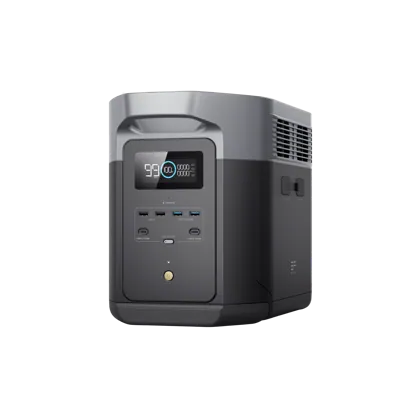 EcoFlow DELTA 2 Max | 2,048 Wh | 7.0 h |
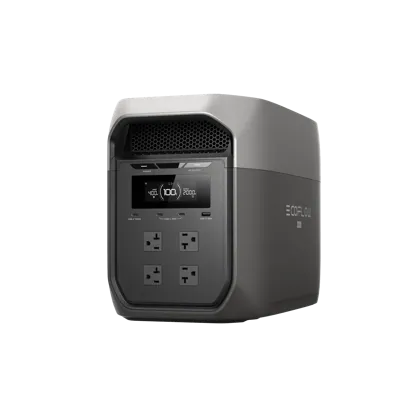 EcoFlow DELTA 3 Max | 2,048 Wh | 7.0 h |
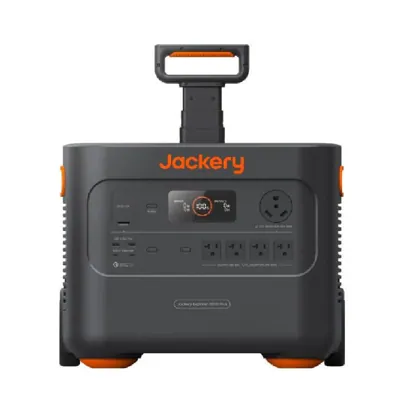 Jackery Explorer 2000 Plus | 2,042 Wh | 6.9 h |
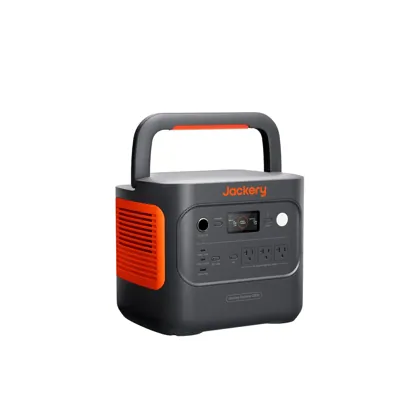 Jackery Explorer 2000 v2 | 2,042 Wh | 6.9 h |
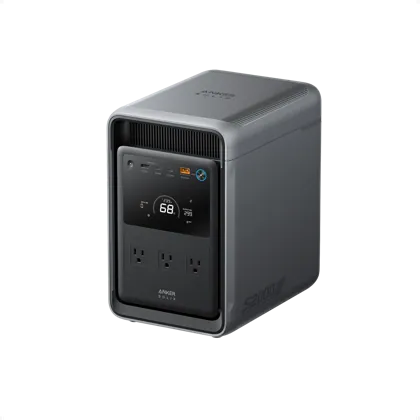 Anker SOLIX S2000 | 2,010 Wh | 6.8 h |
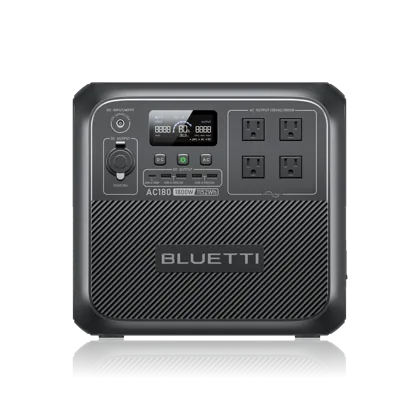 BLUETTI AC180 | 1,152 Wh | 3.9 h |
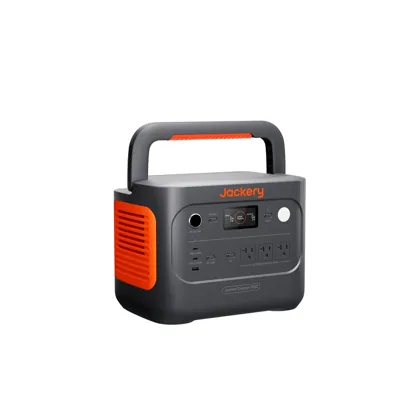 Jackery Explorer 1000 v2 | 1,070 Wh | 3.6 h |
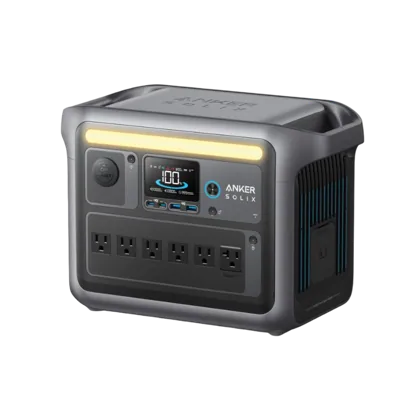 Anker SOLIX C1000 | 1,056 Wh | 3.6 h |
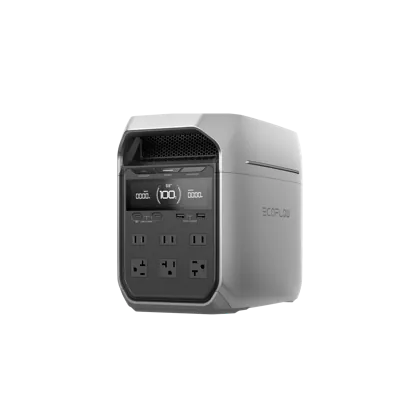 EcoFlow DELTA 3 Plus | 1,024 Wh | 3.5 h |
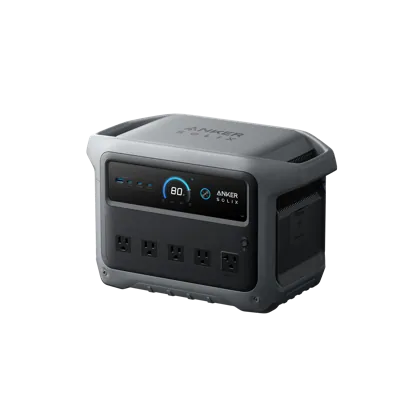 Anker SOLIX C1000 Gen 2 | 1,024 Wh | 3.5 h |
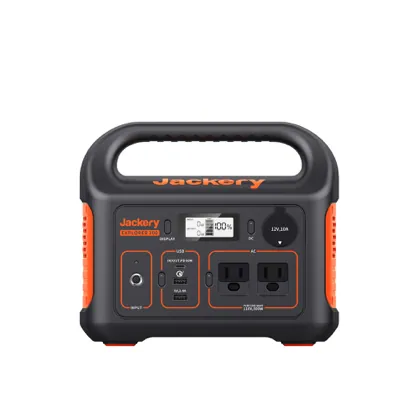 Jackery Explorer 300 | 293 Wh | Can’t run it |
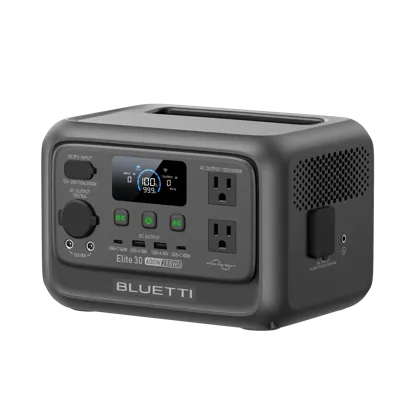 BLUETTI Elite 30 V2 | 288 Wh | Can’t run it |
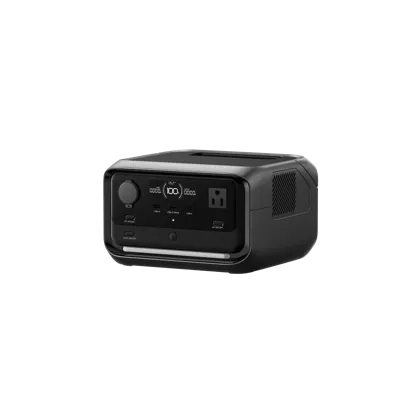 EcoFlow RIVER 3 Plus | 286 Wh | Can’t run it |
A 2 kWh station keeps the heat on for most of a cold night. To get through a multi-day outage, run the furnace in blocks (heat the house, then let it coast), recharge with solar or a generator during the day, or choose a station that accepts extra batteries.
How to connect a furnace safely
Most furnaces are hardwired to a service switch, not plugged into an outlet. Your safe options:
- Transfer switch or power inlet. An electrician installs an inlet box so you can feed the furnace circuit (and a few others) from a station or generator. This is the cleanest long-term setup.
- Furnace plug kit. Some areas allow an electrician to replace the furnace’s hardwired connection with a plug and receptacle, so you can unplug it from the wall and plug it into the station during an outage. Rules vary by local code; ask an electrician.
Never “backfeed” your house by plugging a station or generator into a wall outlet with a double-male cord. It can electrocute utility workers and start fires.
If the furnace won’t light on battery
Some furnace control boards check for a bonded neutral and ground to sense the flame. Many portable power stations (like many inverter generators) have a “floating” neutral, so the furnace may try to light and then shut off. An electrician can confirm whether your furnace needs a neutral-ground bond and set up the connection correctly. All current models we cover output a pure sine wave, which furnace electronics need.
Other ways to stretch your battery in winter
- Lower the thermostat a few degrees and close off unused rooms.
- Sleep warm with an electric blanket, which draws a fraction of the power. See how long a power station runs an electric blanket.
- Skip the space heater. At 1,500 W it drains a 2 kWh station in about an hour. Here’s why.
Never use a gas oven, grill, camp stove or generator to heat a home. They can produce deadly carbon monoxide. Keep a battery-powered CO alarm on every floor.
Our picks for running a furnace
These current stations have the output and surge to start a typical blower, plus enough capacity for a cold night. The DELTA Pro 3 can also connect to a home panel through EcoFlow’s own transfer hardware.
EcoFlow · Large
DELTA 3 Max
- 2,048Wh
- 2,400W out
- 44.8lb
2 kWh and 2,400 W in a lighter body than the DELTA 2 Max (44.8 lb), with 0–80% wall charging in about 68 minutes. It isn’t expandable; the Max Plus version is.
BLUETTI · Large
Elite 200 V2
- 2,074Wh
- 2,600W out
- 53.4lb
2,600 W output, 6,000-cycle LiFePO4 cells and fast 1,800 W wall charging. Not expandable, and heavy at 53 lb.
EcoFlow · Whole-home
DELTA Pro 3
- 4,096Wh
- 4,000W out
- 113.5lb
A 4 kWh, 4,000 W home-backup system with 120/240 V output and 2,600 W of solar input, expandable to about 12 kWh. Heavy at 113.5 lb.
As an Amazon Associate I earn from qualifying purchases.
Building a full outage plan? Use the runtime calculator or read our power outage checklist.