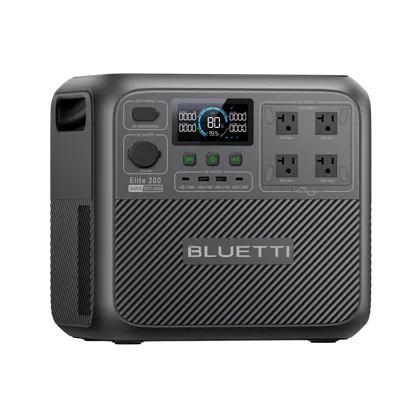
Best portable power station for apartments and renters
Updated Oct 13, 2026
We may earn a commission when you buy through links on this page. As an Amazon Associate I earn from qualifying purchases.
If you live in an apartment, a gas generator usually isn’t an option: you can’t run one indoors or on a balcony, and most leases and building rules forbid them. A portable power station is the practical alternative. It’s silent, produces no fumes, needs no installation and moves with you when you change homes.
What renters usually need to power
- Work from home: a laptop, monitor and Wi-Fi router. A station in UPS mode keeps your connection up through short outages without a blip.
- Food: keeping the fridge cold through a longer outage. See our fridge runtime guide.
- Comfort and safety: phones, lights and a fan; medical devices such as a CPAP.
How big a station do you need?
For working through a few hours of outage (laptop, monitor and router, about 120 W), a 300 Wh station lasts about 2 hours and a 1 kWh station most of a workday. To keep a fridge going for most of a day, plan on 1–2 kWh. Our sizing guide walks through the math, or try the runtime calculator.
What matters more in an apartment
- Weight. If you’ll carry it up stairs or store it in a closet, every pound counts. Compact stations weigh about 7–11 lb; 1 kWh-class models about 24–35 lb; 2 kWh models about 36–62 lb.
- Noise. Fans spin up under load. Several current models advertise operation under 30 dB at light loads.
- UPS switchover. For a desk setup, look for a fast switchover (10–20 ms) so the station takes over the moment the grid drops.
- Wall charging speed. You’ll mostly recharge from an outlet, so a fast wall charge matters more than huge solar input.
Can you use solar on a balcony?
Often, yes, with a portable folding panel leaned against the railing, as long as your building allows it. A balcony usually gets only a few hours of direct sun, so expect a 100–200 W panel to top up a station rather than fully recharge a large one. Check your lease and HOA rules before mounting anything permanently. See our solar charging guide.
Safety in small spaces
Power stations are safe indoors: no fumes, no fuel. Keep the station on a hard, ventilated surface rather than carpet or bedding, away from heaters, and don’t cover its vents while it’s charging or running. LiFePO4 stations, like nearly all the current models we cover, use one of the most thermally stable lithium chemistries.
Our picks for apartments
For desk backup and light use: compact, quiet and easy to store.
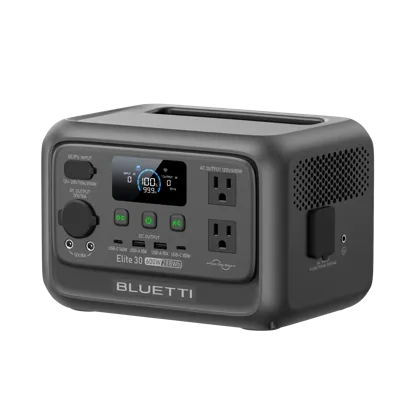
BLUETTI · Compact
Elite 30 V2
- 288Wh
- 600W out
- 9.5lb
A 288 Wh LiFePO4 compact with 600 W output, 140 W USB-C and a 10 ms UPS at under 10 lb. No published surge figure for motor loads.
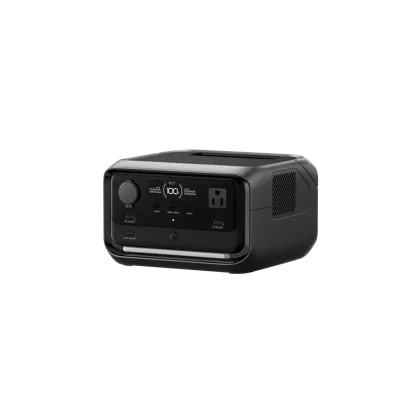
EcoFlow · Compact
RIVER 3 Plus
- 286Wh
- 600W out
- 10.4lb
Twice the output of most compact stations (600 W), a fast 10 ms UPS, and an add-on battery option that triples its capacity.
As an Amazon Associate I earn from qualifying purchases.
For keeping the fridge cold too: 1 kWh stations that are still easy to carry.
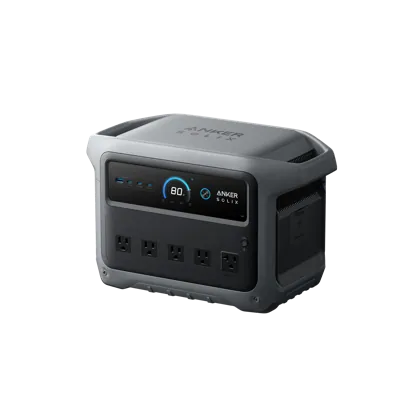
Anker · Mid-size
SOLIX C1000 Gen 2
- 1,024Wh
- 2,000W out
- 24.9lb
The fastest-charging 1 kWh station here (49 minutes from the wall), with 2,000 W output, 4,000 cycles and a 10 ms UPS, at under 25 lb.
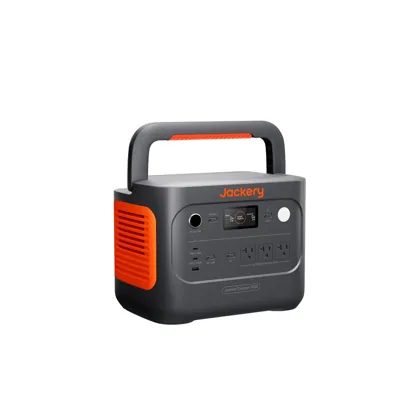
Jackery · Mid-size
Explorer 1000 v2
- 1,070Wh
- 1,500W out
- 23.8lb
One of the lightest 1 kWh LiFePO4 stations, with a 4,000-cycle rating. It has fewer AC outlets than rivals.
As an Amazon Associate I earn from qualifying purchases.